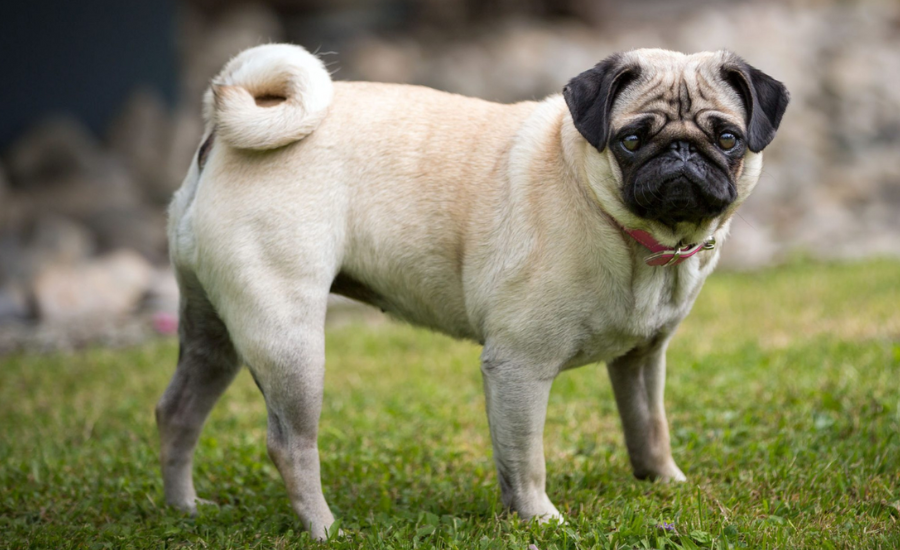
Pug
by Pupchu
The Pug was recognized as a breed by the AKC in 1885.
The Breed Standard
Breed Standard: A description of the ideal dog of each recognized breed, to serve as an ideal against which dogs are judged at shows, originally laid down by a parent breed club and accepted officially by national or international bodies.
About the Breed
Once the mischievous companion of Chinese emperors, and later the mascot of Holland's royal House of Orange, the small but solid Pug is today adored by his millions of fans around the world. Pugs live to love and to be loved in return. The Pug's motto is the Latin phrase 'multum in parvo' (a lot in a little) an apt description of this small but muscular breed. They come in three colors: silver or apricot-fawn with a black face mask, or all black. The large round head, the big, sparkling eyes, and the wrinkled brow give Pugs a range of human-like expressions'surprise, happiness, curiosity that have delighted owners for centuries. Pug owners say their breed is the ideal house dog. Pugs are happy in the city or country, with kids or old folks, as an only pet or in a pack. They enjoy their food, and care must be taken to keep them trim. They do best in moderate climates not too hot, not too cold' but, with proper care, Pugs can be their adorable selves anywhere
Vaccination Advice
The best advice to call your veterinarian before You pick up that new member of the family and ask to have the puppy examined as soon as you become the owner. During medical the examination the veterinarian will look at the puppy’s medical/vaccination history. If the breeder has given vaccinations just recently. And your veterinarian is confident that it was done properly, a recommendation will be made regarding when to come in for the next “booster” injection of vaccine. If the puppy is healthy and unvaccinated, your veterinarian will suggest vaccinating right away. One or more of the vaccines listed in the table will be administered and a suggestion made as to when the next visit should be scheduled.


 Login
Login  Sign Up